Article Synopsis
The BC Vehicle Processing Centre (BCVPC) at the Port of Nanaimo, operational since 2019, is a 60,000 square foot, 27-acre facility that processes and distributes over $500 million in vehicle imports annually, primarily from Japan. Supported by federal investment, the centre fuels local logistics, trucking, and service industries while diversifying import routes and strengthening Nanaimo’s role as a west coast trade and transportation hub.
Ships do not reroute themselves for branding exercises. They move where infrastructure, geography, and economics align. The BC Vehicle Processing Centre at the Port of Nanaimo exists because those conditions converged here.
What is the BCVPC
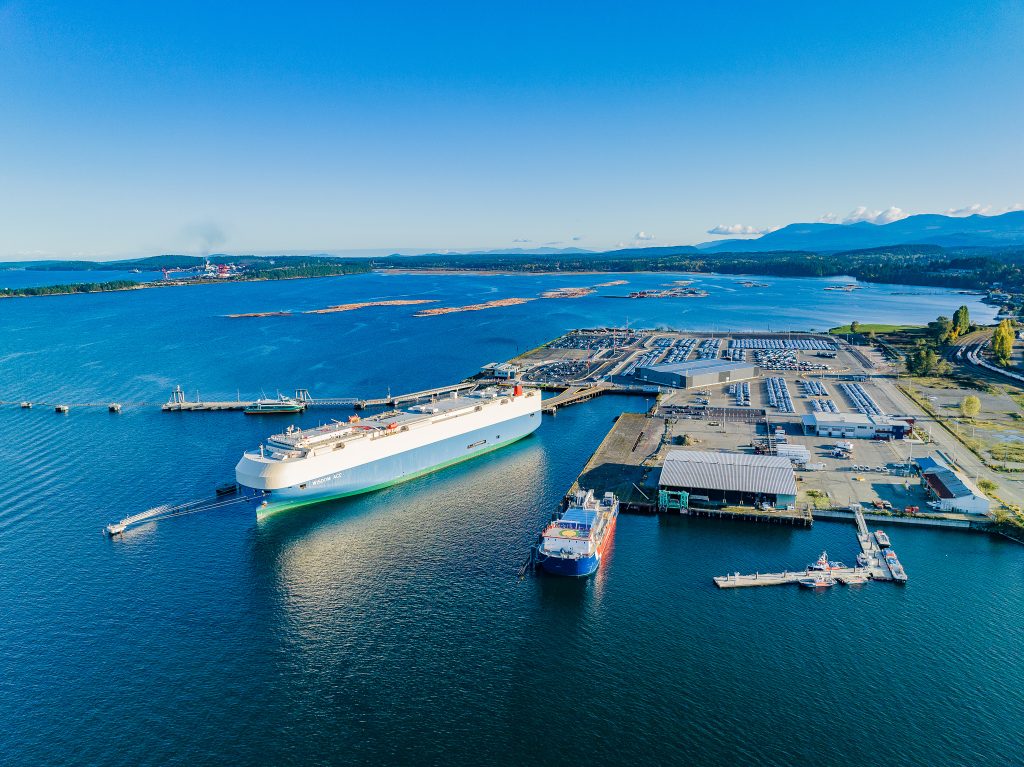
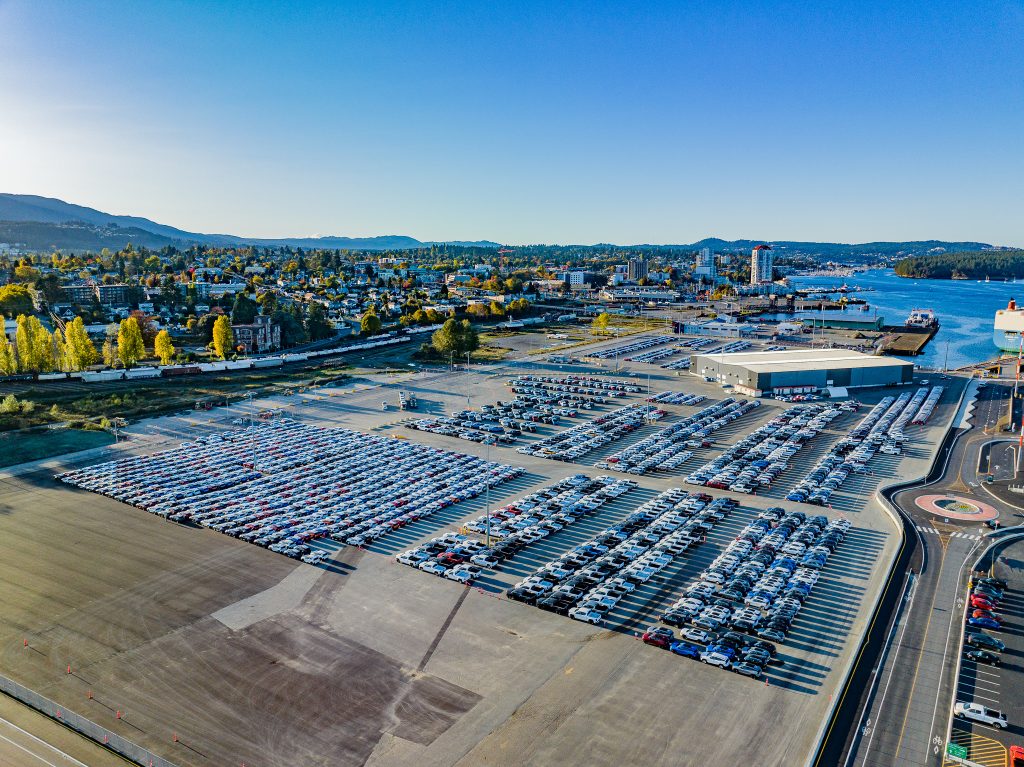
The BC Vehicle Processing Centre (BCVPC) is a purpose-built roll-on/roll-off vehicle import and processing facility at the Port of Nanaimo’s Assembly Wharf that began operations in 2019. It receives vehicle carriers, offloads and stores cars and trucks, and provides inspection, detailing, minor modification, and staging so new vehicles can be sent to dealers and distributors across Canada. Manufacturers now have another west coast pathway that shortens wait times and reduces logistical friction.
Scale, Funding, and Throughput
The BCVPC operates from a 60,000 square foot processing warehouse on 27 acres at Nanaimo’s Assembly Wharf, following a site expansion in 2023. During development, the Government of Canada committed about $6.3 million toward the project, reflecting its role within Canada’s broader trade and transportation network. A provincial government summary reports that the centre processes and distributes more than $500 million worth of vehicles from Japan for the Canadian market annually.
Activity as the True Signal
The most revealing signal is not the building or land itself. It is the activity around it. Vehicle shipments arriving in volume require more than dock space. They activate trucking routes, inspection services, yard operations, maintenance crews, and warehousing. Each shipment pulls local firms into a wider trade ecosystem. Over time, that activity compounds. Regular throughput creates repeat business. Repeat business attracts specialized service providers. Specialized providers create durable employment and reinvestment.
This is how port infrastructure turns into economic gravity.
Infrastructure as Economic Gravity
Nanaimo sits at a geographic hinge between Vancouver Island and mainland markets, with access to deep-water berths and established marine corridors. The BCVPC leverages that position by converting physical geography into commercial advantage. It is not about being bigger than other ports. It is about being strategically useful.
There is also a quieter benefit embedded in this shift. Diversifying west coast import routes reduces dependency on long, congested transport corridors. In practical terms, this means greater resilience for supply chains and more predictable timelines for distributors. In economic terms, it lowers risk and shapes long-term investment behaviour.
Quietly in Motion
Viewed from a distance, the BCVPC is a processing yard. Viewed up close, it is a signal. Capital has committed. Trade routes have adjusted. Local firms are already participating. The system is operating.
Economic development rarely arrives as a single dramatic event. It accumulates through practical decisions made by operators, carriers, and companies choosing where to place their assets. In this case, those choices are already visible on Nanaimo’s waterfront.
The real story is not that Nanaimo is trying to become a logistics hub. It is that, quietly and methodically, it already functions like one.