Ask someone what leisure means and they’ll probably say something like: time off, a weekend, what you do when the work is done.
But consider what falls under that word. Arts, culture, play, recreation, sport, tourism, festivals, events, parks, and trails. And now consider what your life would look like without these things. Pretty glum, right?
Leisure is an incredibly important aspect of life so it is only fitting that we should learn more about the importance of it. And just so it happens, Nanaimo has a globally recognized centre built around these goals.
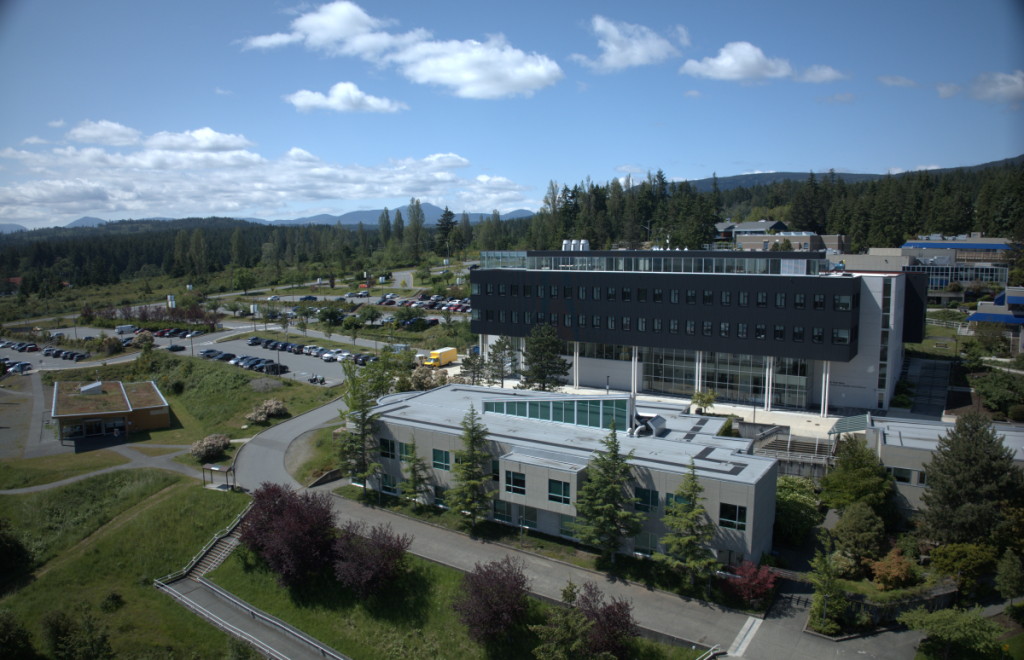
VIU and the World Leisure Network
VIU’s World Leisure Centre of Excellence is part of a global network recognized by the World Leisure Organization, the oldest nonprofit in the world dedicated to leisure research and scholarship. That global network is what gives Nanaimo a line, however indirect, into the United Nations. The WLO holds consultative status with the UN, meaning it is formally recognized as an expert voice on leisure policy and can advise UN bodies directly.
As one of the WLO’s centres of excellence, VIU’s work feeds into that same body of research and advocacy, the same body the UN turns to when leisure policy is on the table. That standing traces back to the WLO’s founding mandate, established in the early 1950s, that leisure is a human right, a principle that remains the foundation for everything the organization and its network of centres do today.
Every centre of excellence in the network operates under three mandates: research, education, and service.
Currently, a VIU master’s student is applying the donut economics framework to recreation in Nanaimo, examining social and cultural impacts alongside financial ones. That work connects directly with the Official City Plan, which has adopted donut economics to guide decision making.
In May, VIU hosted the Canadian Congress on Leisure Research, drawing nearly one hundred and thirty scholars from the UK, Brazil, the United States, Australia, Asia, and Sweden, split almost evenly between graduate researchers and industry practitioners.
That access means Nanaimo has a direct line to the ideas that change the trajectory of cities.
Recreation Is More Important Than You Realize
Nanaimo is growing. Its average age is coming down. The decisions driving that shift are not only about commute time or job availability but what it means to experience a city. Is there a great system of museums, hiking trails, third spaces, and those areas that contribute to community experience?
If this infrastructure breaks down and families cannot get their children into swimming lessons, it is not a minor inconvenience. It is a failure of social infrastructure with downstream effects on safety, health, community cohesion, and the economy.
The UK has a term for the economic logic embedded here: reconomics. The idea is that economics does not exist separately from recreation or leisure. You cannot remove parks, aquatic facilities, and cultural institutions from a city’s balance sheet and expect the returns to hold.
The importance of this has been coined in the term social prescribing. Now well-established in the UK and gaining ground in Canada, clinicians refer patients to recreation programs and community activities rather than clinical treatment alone. The results are well documented, particularly for dementia, depression, and social isolation. Leisure infrastructure is not a cost to a system but an investment into it.
The Door Is Open
Most cities discover the value of leisure infrastructure after they’ve already underinvested in it. The aquatic centre that closes. The recreation program with a two-year waitlist. The new art gallery that never gets built. By the time those gaps are visible, they’re expensive to close and the people who left because of them are not coming back. Nanaimo has something most mid-sized cities don’t: a globally connected research institution already embedded in asking these questions, already producing the evidence, already building the relationships. The work now is to make sure the city understands what it has, and builds accordingly.