Article Synopsis
Reach Systems, a Nanaimo robotics company founded by Colin Dobell in 2021, builds remote winches, cable reel systems, cameras, and robotic crawlers for demanding environments. NASA ordered a custom CROC XL tether management system to support ground testing tied to Artemis activities. Reach manufactures locally, employs VIU graduates, and traces its roots to Dobell's earlier company, Inuktun Services. The company also develops subsea hydrophone deployment technology with partners including Shift Coastal Technologies, Sensor Technology, and Portugal's ZeroUSV.
Nanaimo companies ship components around the world. One local company’s hardware might now travel as far as the moon.
Reach Systems designs and manufactures remote winches, cable reel systems, cameras, and robotic crawlers for environments people cannot safely access. Its equipment supports ocean research, commercial diving, inspection, defence, and autonomous systems work. It sits alongside SEAMOR Marine and Shift Coastal Technologies in a growing Nanaimo cluster building advanced technology for demanding environments.
Founder Colin Dobell started the company in 2021 after running into the same problem repeatedly at his previous company, Inuktun: winch and cable reel products on the market never quite matched what the work required. He came to see that as a common problem across the robotics and remote equipment industry, so he started Reach Systems to provide cable reel and winch products to OEM clients for integration with their own systems. Cameras and robotic crawlers followed. Dobell credits two things for the company’s edge: an engineering process shaped by field deployments rather than lab assumptions, and a Canadian manufacturing base that he says matters more to customers than it used to.
The NASA Order
NASA has ordered a custom version of Reach’s CROC XL tether management system, adapted to integrate NASA’s own motor. It will support a ground technology demonstration system on Earth, laying cable and connecting equipment for testing tied to Artemis activities. Whether the hardware ever reaches the moon remains an open question. For a five-year-old company in a city with no aerospace pedigree, landing a NASA order at all is the milestone.
“Controlled deployment and recovery of cable is one of the hardest, least visible problems in complex operations, whether the setting is subsea, on deck, or a ground test on land,” Dobell said. “A winch may look simple from the outside, but the engineering behind controlled payout, recovery, integration, connectivity, and reliability becomes increasingly important as systems become more capable.”
Built and Tested in Nanaimo
Reach operates out of roughly 3,600 square feet of office and manufacturing space, including its own small machine shop, with plans to nearly double that footprint within the year. Keeping manufacturing local means engineers can put lessons from deployments straight back into the product. Three of the company’s employees are VIU Computer Science graduates, part of a local talent pool Dobell says has grown considerably since his Inuktun days.
Two Companies, One City
Reach is Dobell’s second Nanaimo robotics company. He joined Inuktun Services in 1996, a company already exporting globally, and later took ownership, building on that foundation by growing the team, expanding the product line, and pushing into new markets before its acquisition by Eddyfi Technologies. Seven former Inuktun employees now work at Reach, carrying that technical depth forward. Dobell says people remain the biggest reason to build a company like this in Nanaimo rather than a larger centre. The cost advantage that once made it easy to recruit talent to the city has faded, but a far larger local pool, helped by VIU’s expanded technical programs, has taken its place.
A Growing Ecosystem
Reach sources components and support from Unlimited Fab, Dueck Manufacturing, Motion, Industrial Plastics, ACE, Allegra Printing, and Five Star Embroidery. But one local gap remains: contract anodizing, which the company currently has to source off-island.
Subsea Sensing, From Nanaimo to Portugal
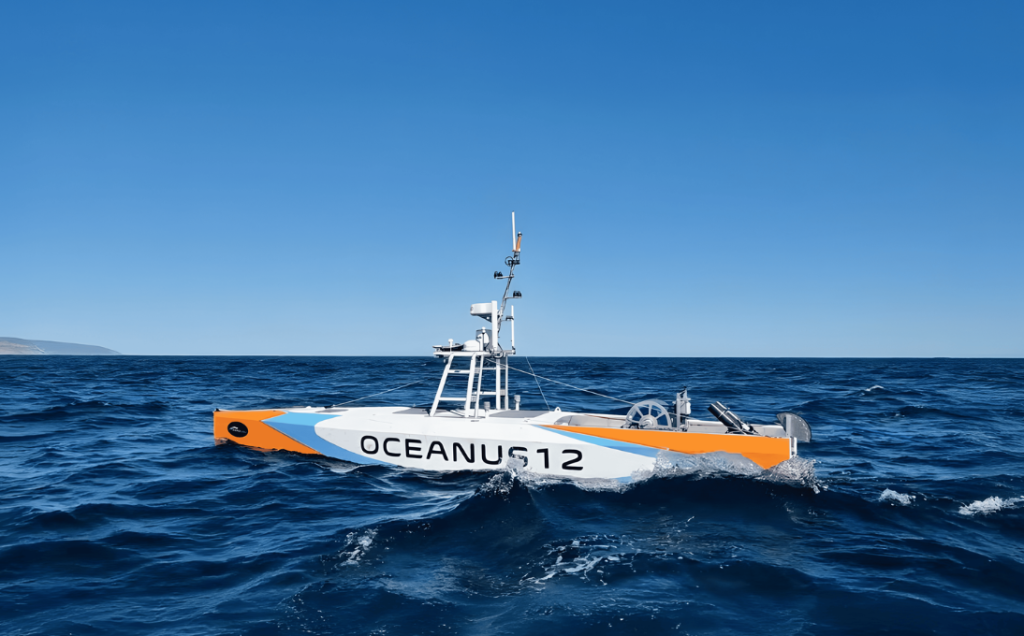
Reach’s deployment technology has moved into undersea sensing. Thin line hydrophone arrays are standard tools for detecting submarines. With Canada’s Ocean Supercluster backing, Reach partnered with Shift Coastal and Sensor Technology, an Ontario and Nova Scotia array manufacturer, to demonstrate remote, autonomous deployment of one such array. No naval operation has used this exact combination yet, but together the pieces form a package smaller and more affordable than existing options. Reach ran a similar demonstration in Portugal in 2025 with ZeroUSV, which builds uncrewed vessels that launch and recover towed sonar arrays.
Looking Ahead
A camera line upgrade is coming this fall, alongside a new line of remote winches built to deploy hydrophone arrays from uncrewed surface vessels, opening doors into environmental monitoring, whale tracking, and anti-submarine warfare. Reach is also pushing its robotics platform into industrial territory, including an early proof-of-concept project on robotic silo cleaning for a distributor in the Brazilian market.
Dobell says what the company needs next mirrors what Nanaimo’s manufacturing sector needs broadly: skilled engineers and tradespeople, room to grow production, and a stronger local supplier base.