Article Synopsis
On April 24, 2025, a single cruise ship brought 1,860 passengers to Nanaimo, generating a 15% increase in sales along Commercial Street. The result was not accidental. It came from coordinated efforts across Tourism Nanaimo, port operators, longshore workers, safety services, and local vendors. Nanaimo Prosperity Corporation highlights this as an example of proven economic capacity: the ability to convert visitor arrivals into measurable local revenue. For cruise operators evaluating port reliability, Nanaimo demonstrated it can align people, timing, and place under real conditions.
It is easy to point to a single cruise ship and talk about a 15% lift in sales.
It is harder, and more useful, to ask what had to be in place for that lift to happen at all.
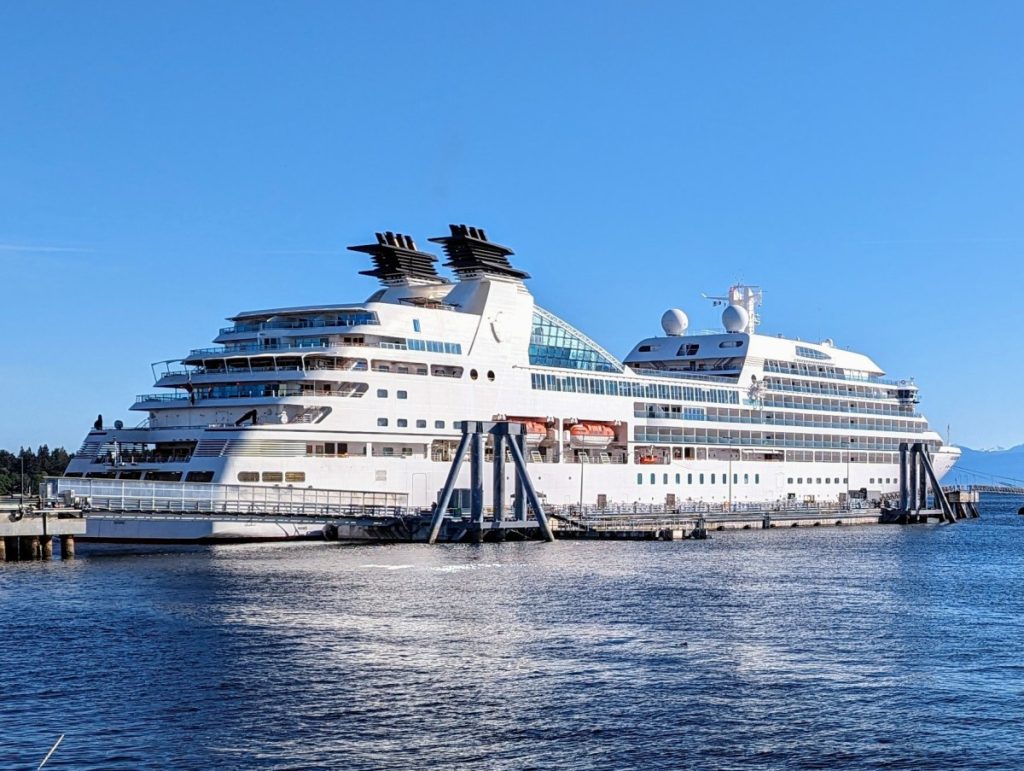
On April 24, roughly 1,860 passengers came ashore in Nanaimo. Of those, 428 were transported directly downtown by shuttle. Hundreds more walked. Another 267 booked paid excursions with local operators. Businesses along Commercial Street reported a 15% increase in sales that day, attributed to cruise traffic.
Those numbers matter. But on their own, they only describe activity. They do not explain why that activity translated into measurable local spending.
The difference is coordination.
Where the Spending Was Captured
This season, the Port of Nanaimo introduced a Portside Market positioned at the point of disembarkation.
Cruise passengers make decisions quickly. Where they go first often determines where they spend. By placing local vendors at the first point of contact, the city reduced the gap between arrival and transaction.
That shift is small in distance but significant in outcome. Instead of dispersing immediately, visitors encountered a curated local offering within minutes of stepping ashore.
Red’s Bakery handing out 600 Nanaimo bar samples is a simple example. It is also a clear mechanism. A local product, introduced early, increases the likelihood of downstream spending tied to place rather than convenience.
What Coordination Actually Did
Making that day function required more than availability. It required alignment across roles that do not typically operate as a single system.
- 25 Tourism Nanaimo ambassadors were positioned to direct flow and answer questions.
- 12 ILWU Local 508 longshore workers managed docking and turnaround.
- SSA Marine staff coordinated vessel operations.
- BC Coast Pilots handled navigation.
- RCMP, Island Health, and Commissionaires ensured public safety and response readiness.
Individually, these are standard functions. Together, they reduce friction at every step of the visitor experience.
Shuttles run on time. Pedestrian flow is clear. Excursions depart as scheduled. Vendors are ready when passengers arrive. Safety coverage is visible but unobtrusive.
If any one of these elements breaks down, the outcome changes. Delays reduce dwell time. Confusion disperses visitors. Missed connections cancel purchases.
The 15% increase in sales is not just demand showing up. It is demand being able to move, decide, and spend without interruption.
From Event to Repeatable Outcome
A single successful day does not establish a pattern. But it does show whether a pattern is possible.
What matters to cruise operators is not just destination appeal. It is reliability. Can a port move thousands of people efficiently, safely, and in a way that supports positive passenger experience?
That assessment is operational. It is based on turnaround times, excursion performance, passenger flow, and on-the-ground coordination.
Nanaimo demonstrated that it can align those elements on a live day with real volume.
That does not guarantee future calls. But it changes the starting point of the conversation from potential to proven capacity.
What This Means for the City
The Port of Nanaimo has physical infrastructure. Berths, terminals, and access points.
What this day illustrates is a second layer that is less visible but just as important. A network of organizations that can operate in sync when demand arrives.
That network determines whether visitors simply pass through or meaningfully engage with the local economy.
Cities that lack this coordination tend to absorb traffic without capturing its full value. Visitors arrive, but spending disperses quickly and unevenly.
Cities that can align people, timing, and place increase the share of that spending that stays local.
A More Grounded Definition of Capacity
It is easy to describe collaboration as a strength.
It is more accurate to define it as capacity when it produces consistent, measurable outcomes under real conditions.
On April 24, Nanaimo did not just receive a ship. It converted arrival into activity, and activity into local revenue, within a constrained window of time.
That is what economic capacity looks like in practice.